

Overview:
This report details how I upgraded the severity of a self XSS vulnerability to a non-self XSS via CSRF, changing its status from P5 to P3.
Initial Discovery:
- Self XSS Identification: Initially, I discovered an XSS vulnerability in a form submitted using the POST method. This meant the exploit was self-contained, classifying it as self XSS since I couldn't send the link to victims.
- Assessing the Potential for Non-Self XSS: I questioned whether this self XSS could be converted to a non-self XSS via CSRF.
Analysis and Exploitation:
Request Interception: I intercepted the form submission request and noticed the absence of a CSRF token, indicating a CSRF vulnerability.
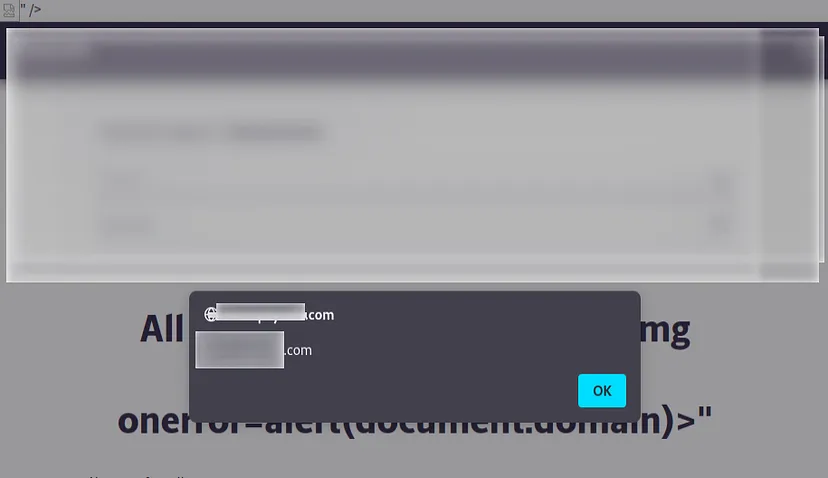
Payload Injection: I injected the following payload into the search box and intercepted the request:"><img src=x onerror=alert()>
CSRF PoC Creation: Using Burp Suite, I created a CSRF proof of concept (PoC) and tested it in the browser. The XSS was successfully triggered via CSRF, converting the vulnerability to non-self XSS.
Reporting and Validation:
- Initial Submission: The vulnerability was initially marked as informational.
- New Submission: I made a new submission including the CSRF PoC to demonstrate the non-self XSS.
- Validation: I tested the PoC on multiple devices to confirm the absence of a CSRF token and ensure consistent exploitation.
Outcome:
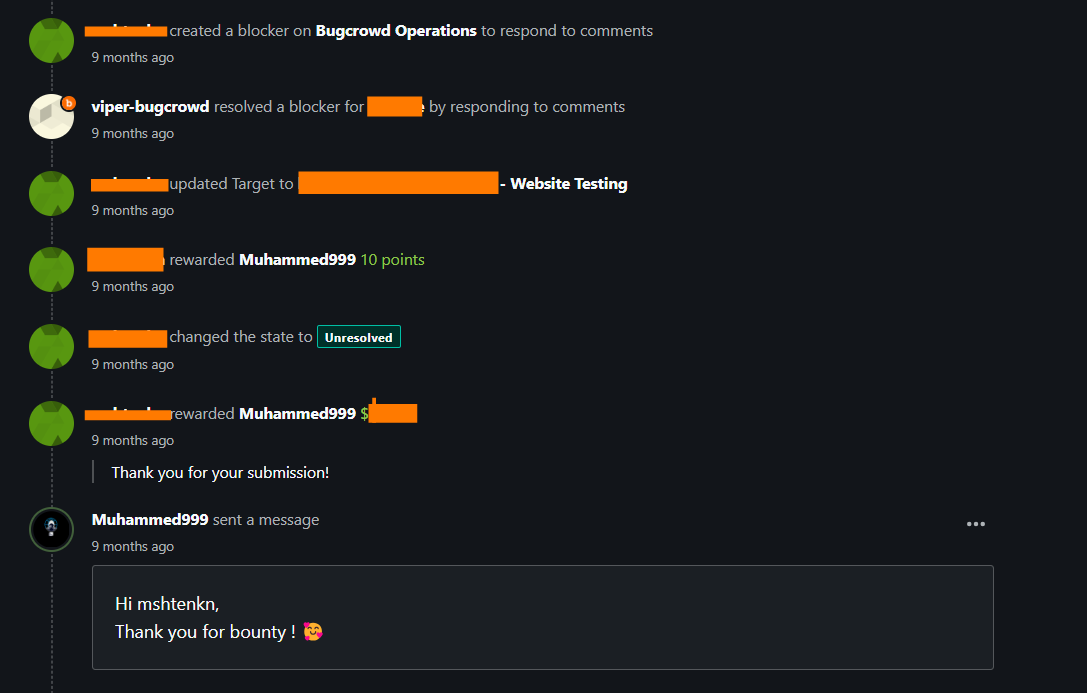
1.Report Status Changes: 1. After 3 days, the report status changed to triaged. 2.After 5 days, the submission status was changed to unresolved.
2.Bounty Awarded: I received the bounty following the report's validation.
Response from Bugcrowd Team:
Tips for Converting Self XSS to Non-Self XSS:
- Always check for CSRF vulnerabilities when dealing with form submissions.
- Use tools like Burp Suite to intercept and analyze requests.
- Test PoCs across multiple devices to confirm the absence of CSRF protection.
I hope this information is helpful to you.
Best regards, Secone4all_admin
No comments yet
Be the first to add something useful.